Exploring the benefits of a "faux" live edge table
WallGoldfinger explores walnut tables created with veneer and applied solid wood to mimic a slab table. Learn about this fabrication technique's benefits.
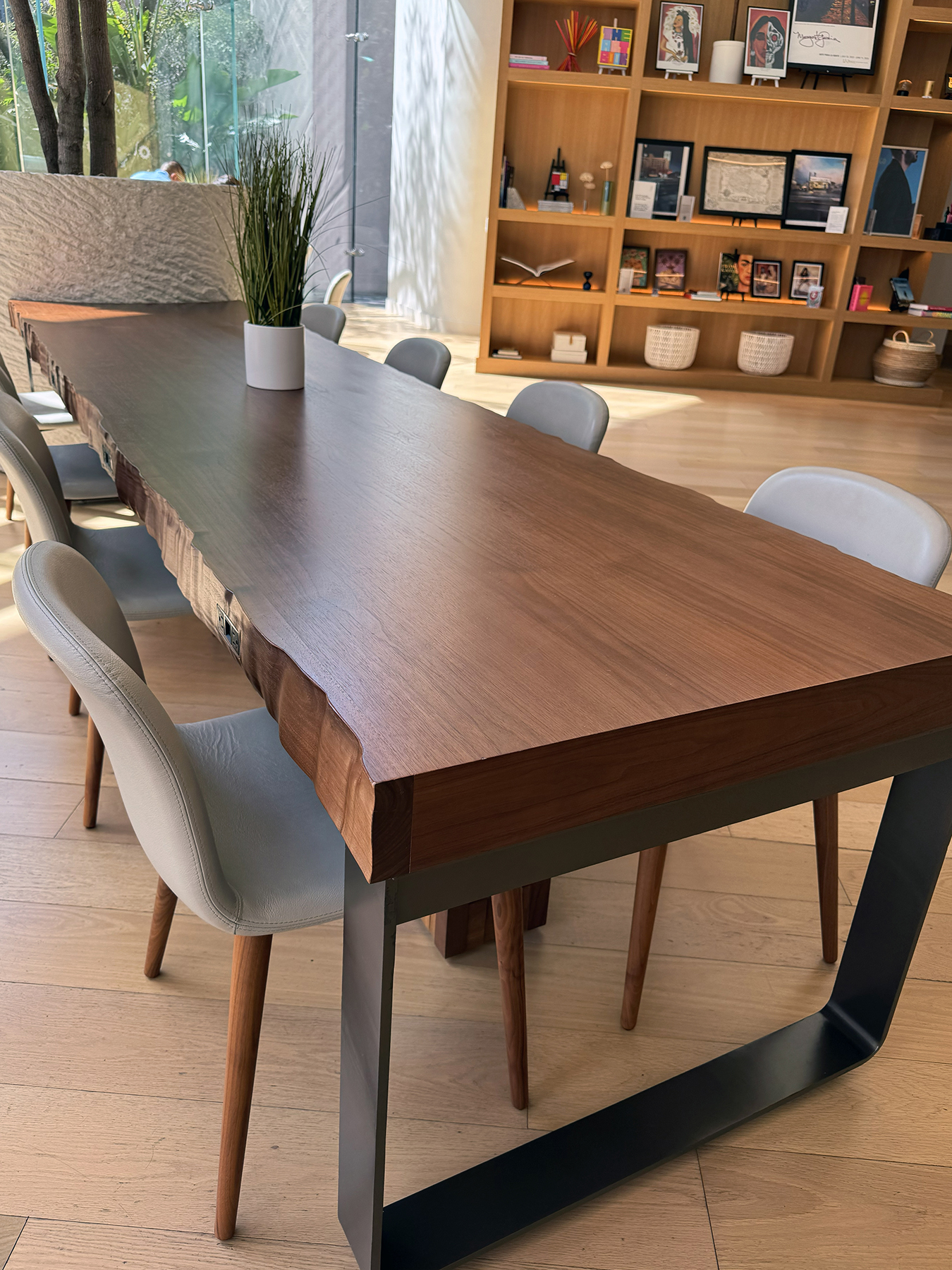
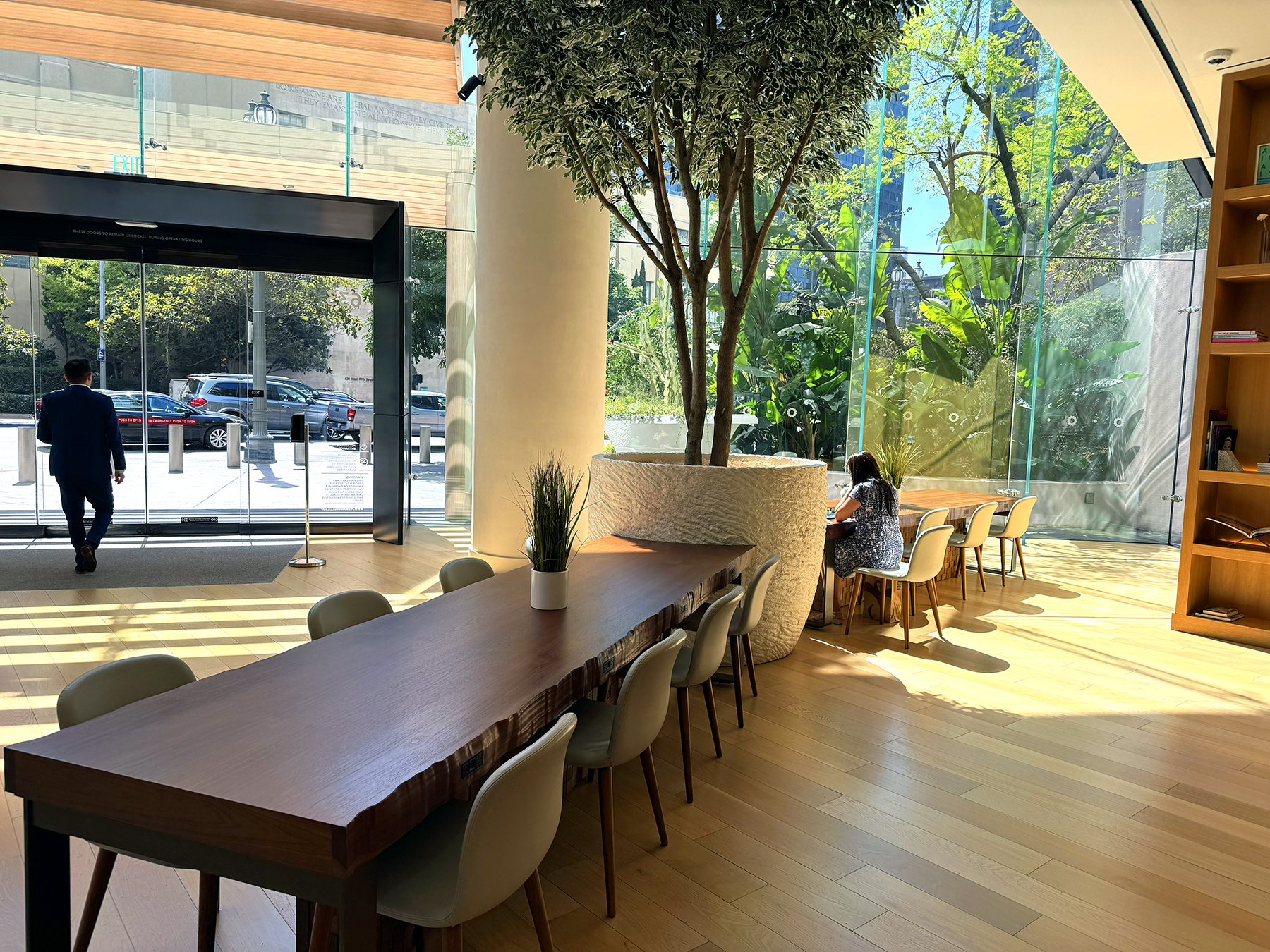
The designer of a lobby of a prominent bank headquarters reached out to WallGoldfinger seeking what the corporate furniture company does best: a unique, custom design.
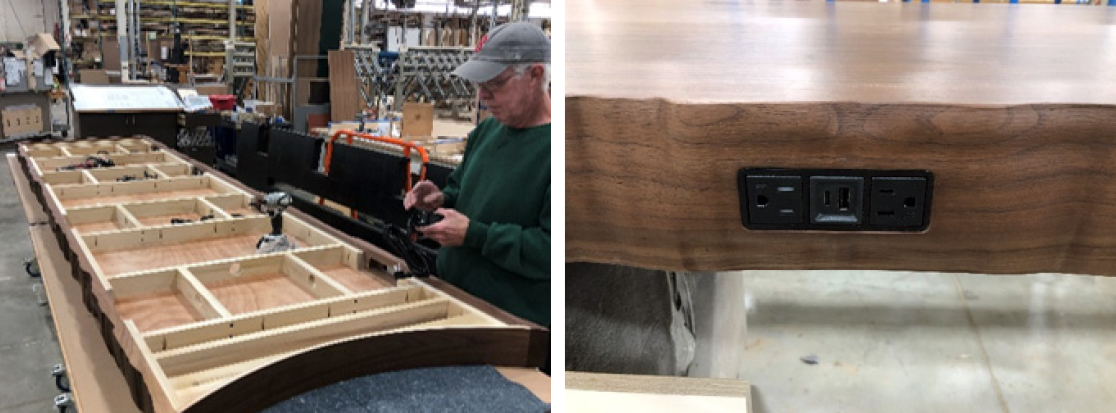
In this case that design was for 10-foot by 3-foot live edge tables made from 4-inch-thick solid walnut slabs with power units set flush into the table edge and on a base of woven wood and metal hoop or frame legs. The bases and metal would not be a problem, but the top slabs presented issues.
First, obtaining walnut slabs of that size – if available – would be expensive, as walnut supplies have been diminishing since the 20th century, so much so that the National Hardwood Lumber Association reduced the grading standards to make the lumber more available in smaller sizes. Clean slabs 10 feet long and 3 feet wide are rare.
Second, any wood cut to a 4-inch thickness would be difficult to kiln dry effectively, resulting in checks during the process and making the slabs very susceptible to movement – twisting, splitting, and cupping - in the future, even after installation, which would not have met the client's requirements. And imbedding power outlets into the wood and the wiring supporting it could be rough and ugly.
Third, using the walnut in that manner would not help the sustainability of the wood species.
WallGoldfinger proposed an alternative: a faux live edge.
The WallGoldfinger team suggested creating a top of walnut veneer on a stable substrate and frame, with 2-inch by 4-inch solid walnut edges applied to the sides. (Building out of veneer is always more sustainable than using solid wood.) WallGoldfinger would then run the tops through a CNC machine, carving a pattern on the edges that looked like a live edge. To clarify its proposal, WallGoldfinger created renderings of what the table could look like.
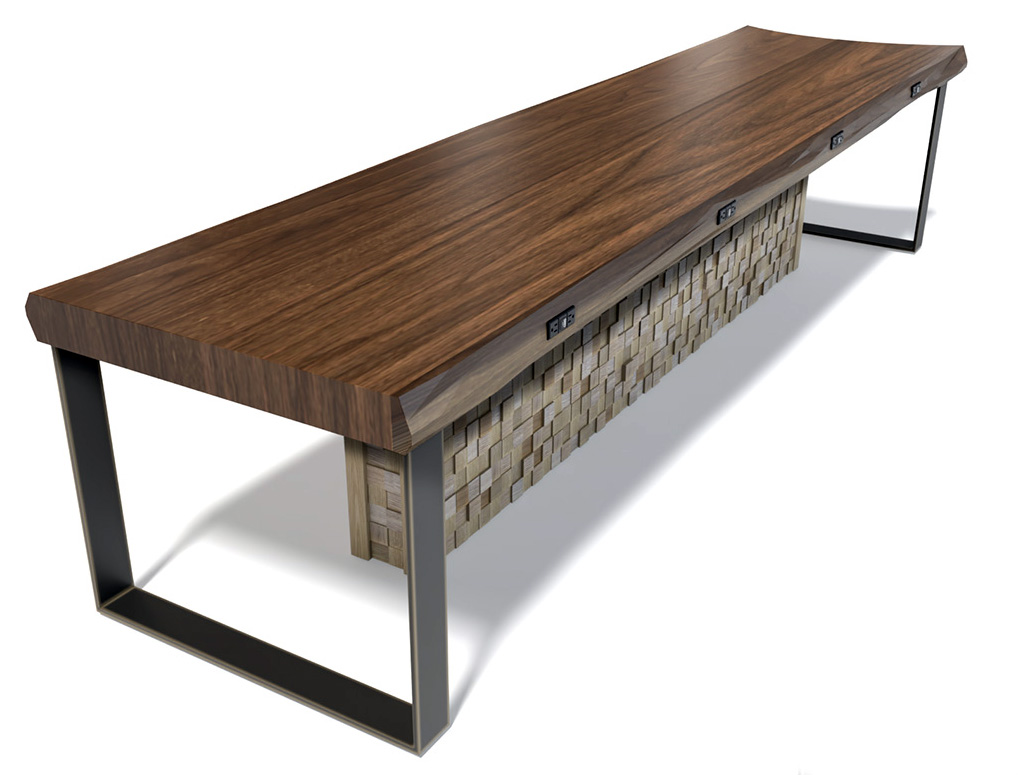
The client liked it, and WallGoldfinger fabricated the unique solution.
The final result was better than anticipated with WallGoldfinger’s skilled finish department expertly blending veneer and solid wood to create a more consistent color. The CNC programmer even created eight different edges, rather than repeating one eight times, so someone with a critical eye would not notice any repetition.
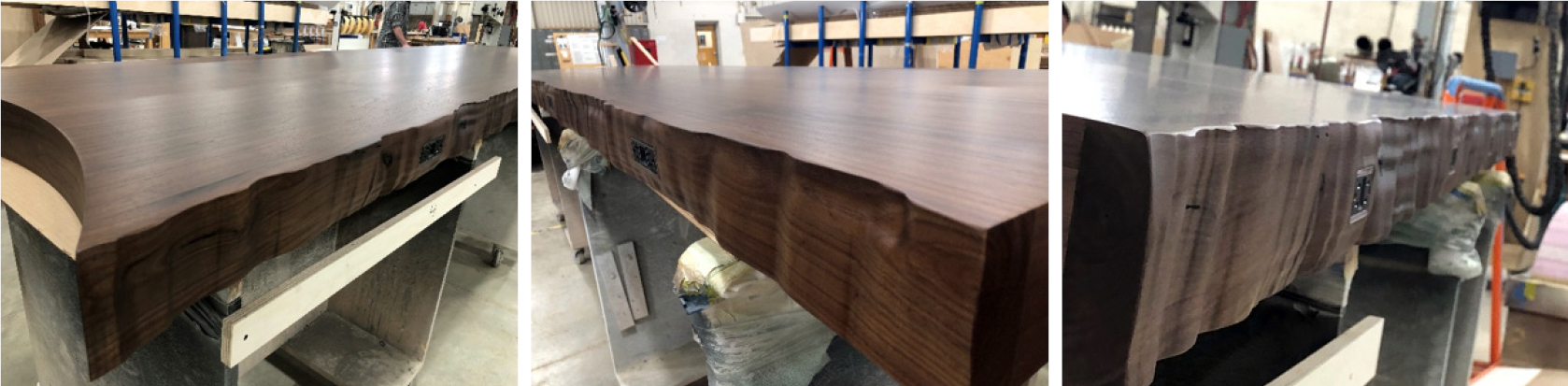
Beneath the walnut is indeed a very stable structure of plywood and solid poplar, engineered to mount easily to the base and to enable flush-mounting the power units and allow for wire passage.
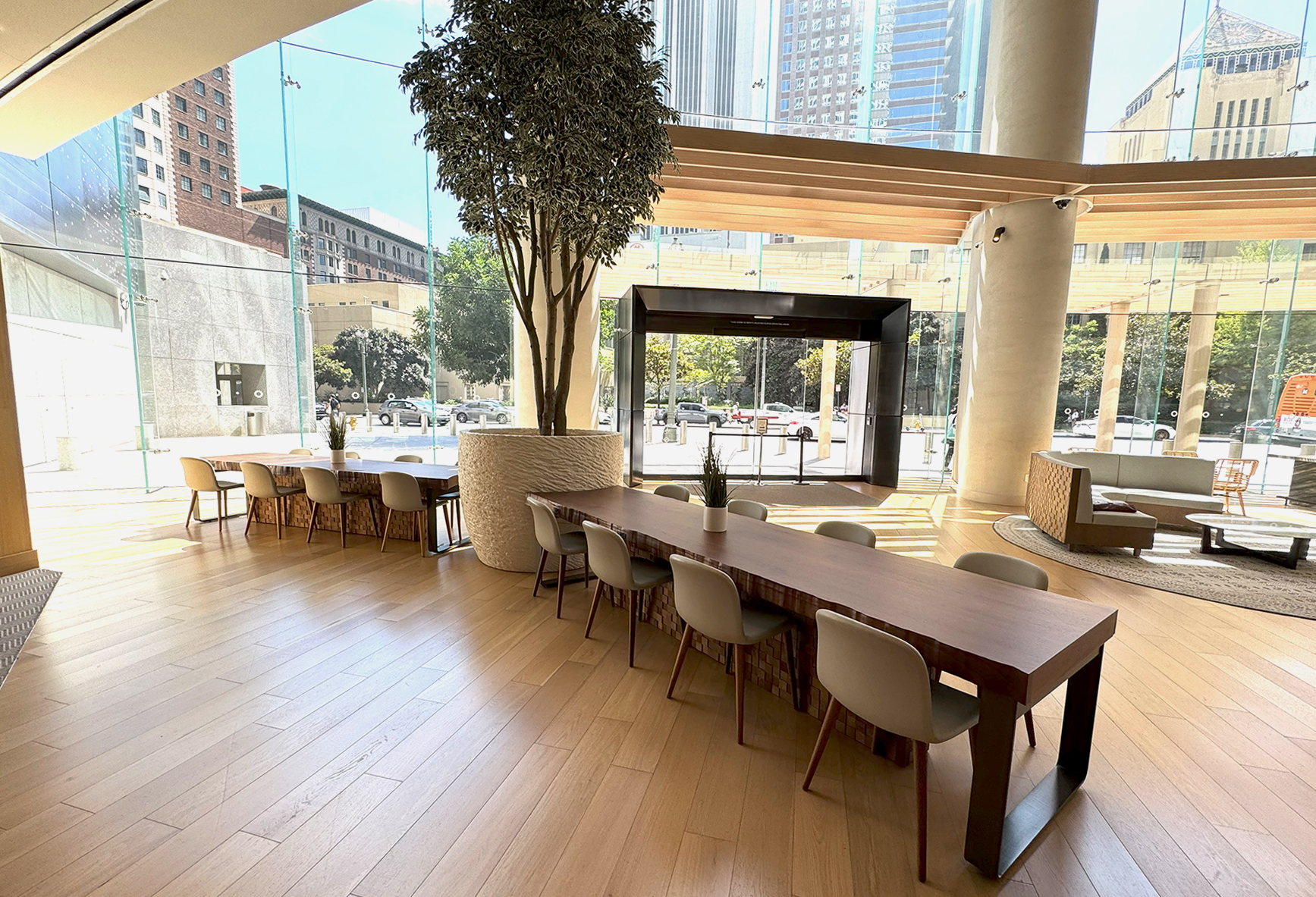
Here are the tables installed in downtown Los Angeles, looking very much like solid slab tables.

About Us
Combining artistry with technology to produce superior woodwork.

Recognition
At Mark Richey Woodworking, we are honored to have been recognized for producing superior work on diverse projects.

Our Impact
We give our time and resources to protect the environment, and to support projects that we believe in.