The best of both worlds: Human skill and machine precision with robotic spray finishing
Mark Richey Woodworking and WallGoldfinger Furniture share the merits of robotic finishing for efficiency, quality, and employee health.
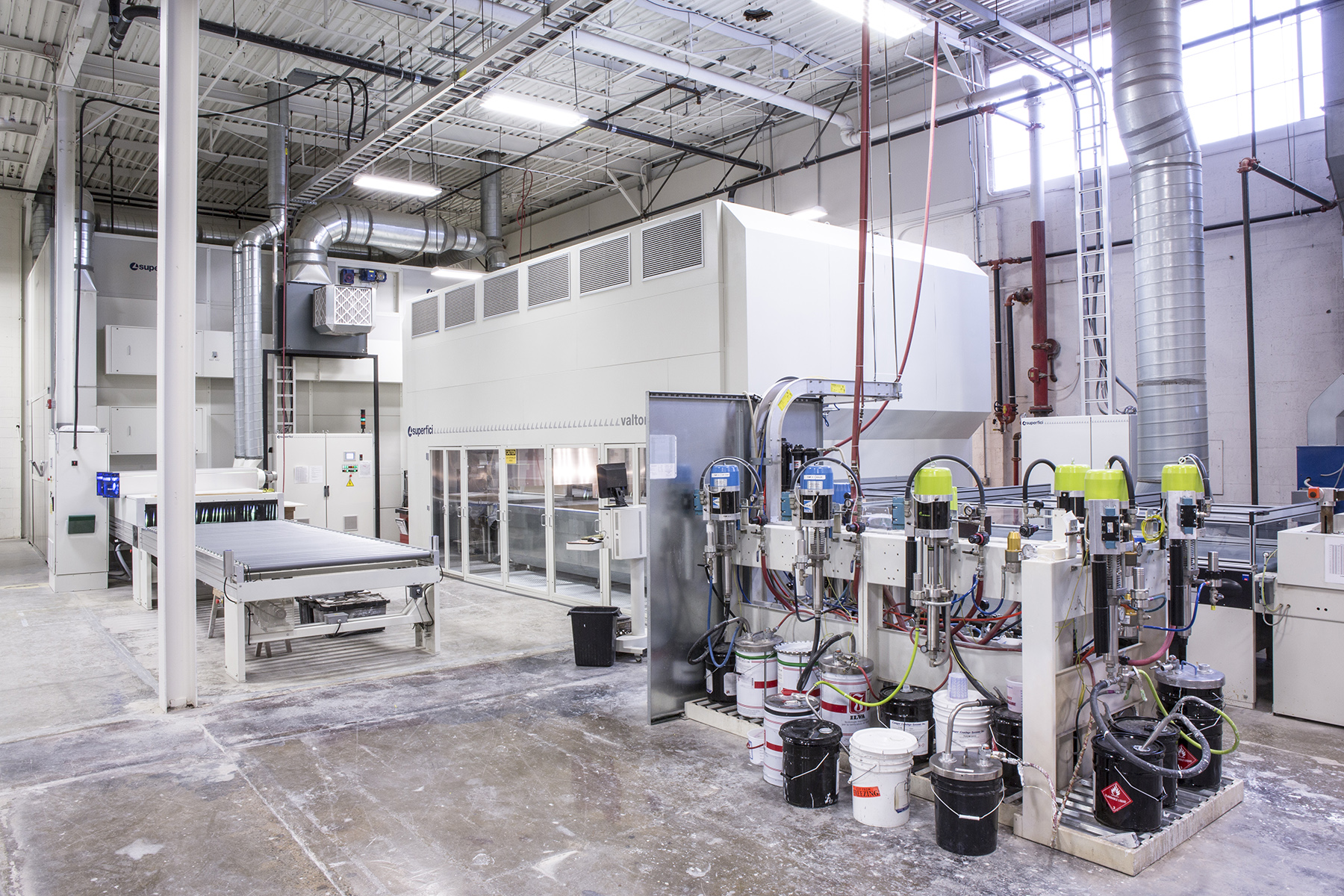
In the finish department of Mark Richey Woodworking and WallGoldfinger Furniture, a robotic finishing machine improves capacity, quality, and employee health and safety.
Chief Operating Officer Greg Porfido and Finish Foreman Tom share how the Italian-made robotic finisher complements traditional hand finishing.
Augmenting hand finishing
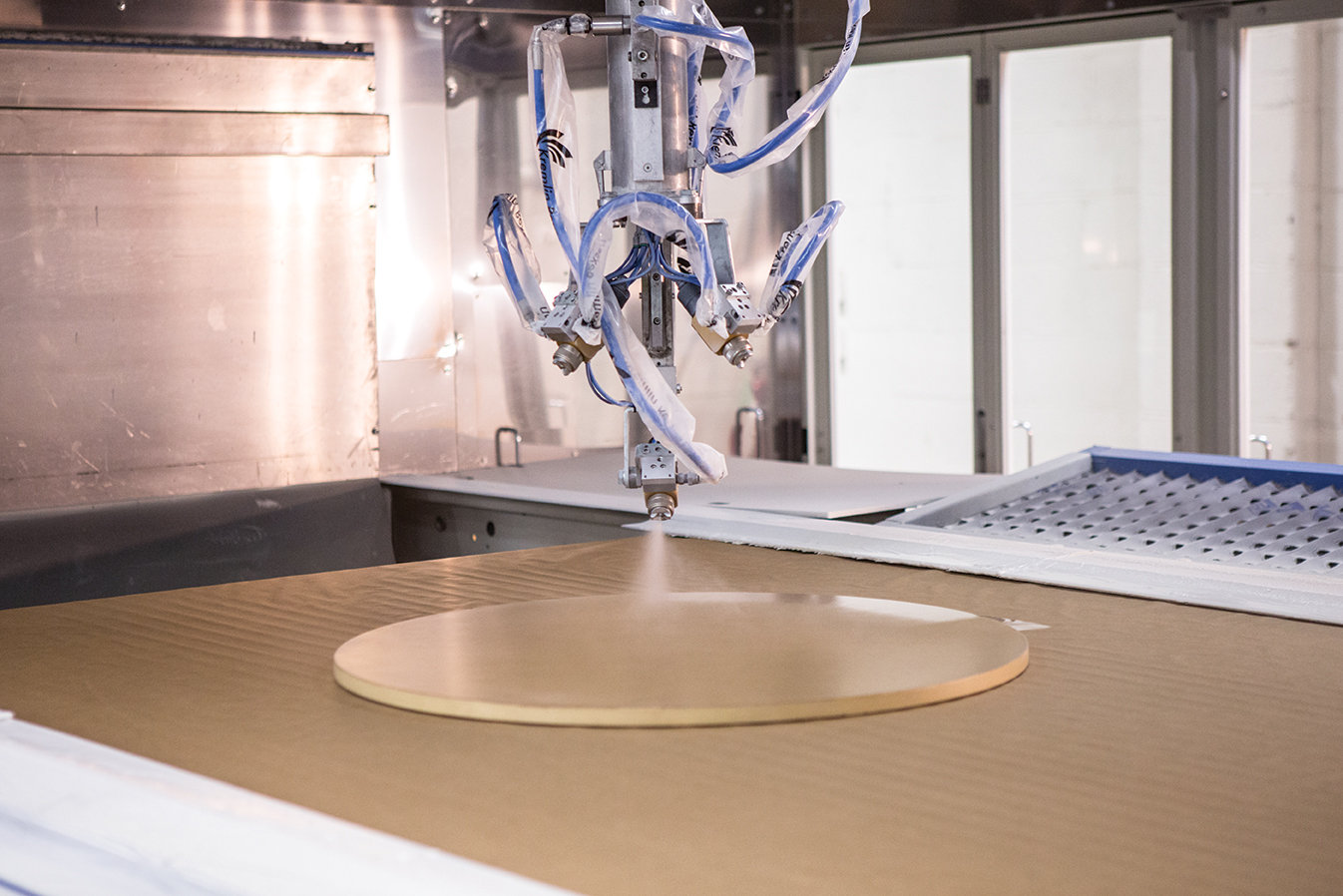
The first of its kind in the country, the high-tech, four-axis machine applies primers, stains, and both clear and colored opaque polyurethane topcoats to flat panels up to 4 feet by 10 feet and up to 8 inches thick. Water-based and formaldehyde-free processes prevent off gassing and VOCs, which protect both employee and customer health.
The machine is not about replacing humans – it augments them. The robot requires skilled finishers to program and maintain it. And it works side by side with finishers in spray booths applying the same finishes to small projects, large panels, complexly shaped, or assembled pieces.
“You need to know the ratios of finish in order to flag issues,” explains Tom. “The [finish] recipes are baked in, but you need to understand if it’s coming out correctly. If just one gun is dripping finish, even a small amount, you won’t see it until the end — that could mean 25 panels with the same issue.”
Just like hand finishing, robotic finishing requires diligent maintenance. “Every two to three days, we add new filters, wipe the glass, and clean all the belts,” says Tom. “We take a lot of pride in keeping the machines running great. We bought this machine 13 years ago and it looks brand new.”
Improving both safety and speed
The robotic finisher is a closed chamber system – important for both employee health and quality. The closed chamber keeps finishes away from employees, who would otherwise be wearing protection to avoid breathing it in, and it keeps dust from marring surfaces during drying.
Mark Richey uses catalyzed acrylic polyurethane. It is formaldehyde free, very durable, and contains a non-yellowing component. It’s especially good for light woods.
The system is fast curing. Through ultraviolet-or heat-curing a piece goes from robotic spray gun to complete in about 45 minutes, which is a massive improvement over letting hand sprayed pieces cure in an open room.

“In our field, efficiency is key,” says Tom. “Smaller amounts of work make more sense to do by hand. We choose machines for efficiency. Robotic spray finishing isn’t an exception.”
Greg notes robotic finishing reduces the amount of labor required to complete a project by about half.
That speed is primarily earned through combined spraying. The tool has five spray guns, one of which can go 360 degrees to go around the edges, while the other four guns finish top surfaces.
As noted, there’s also the drying component. The robot’s oven dries pieces in under an hour, depending on the finish. Without the oven, it can take up to six hours.
Reduced waste, improved consistency
This machine only mixes the hardener and the finisher at the time of the job. It’s an on-demand system that prevents premature hardening inside the mixer itself, eliminating finish waste.
The robotic spray finisher provides consistent output every time, as long as it’s programmed correctly and checked regularly. It replicates what a hand finisher does, and does it over and over again for hours in a streamlined way that would be difficult to achieve as a human.
Better results for our clients
Mark Richey Woodworking is busy. Interest far exceeds capacity, making efficiency and increased output key to meeting client schedules.
The company’s work is installed in high-end spaces with equally high-quality expectations. Quality improvements gained through consistent application and elimination of dust particles mean a better outcome for projects.
“Good finish is critical and can make or break a job,” notes Greg.
Furniture and millwork projects remain a labor-intensive process. Applying finish to match a client sample is a final step of the process, and an important one. The results are what clients will see in their offices, performance spaces, or homes for years to come.
Recent work using robotic spray finishing
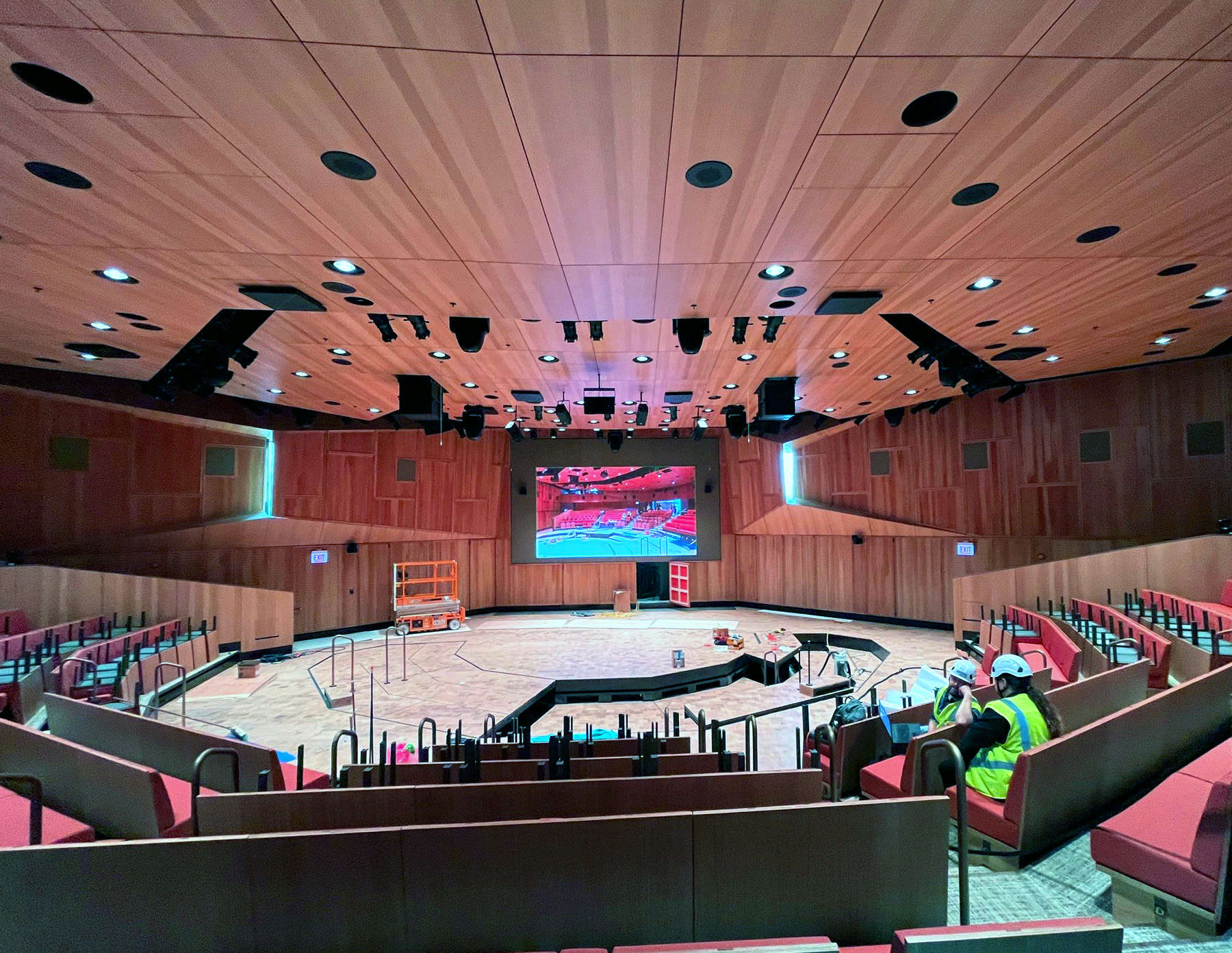
Wall and ceiling panels in the auditorium at the recently installed Obama Presidential Center in Chicago are an example of panel spray robotic finishing.
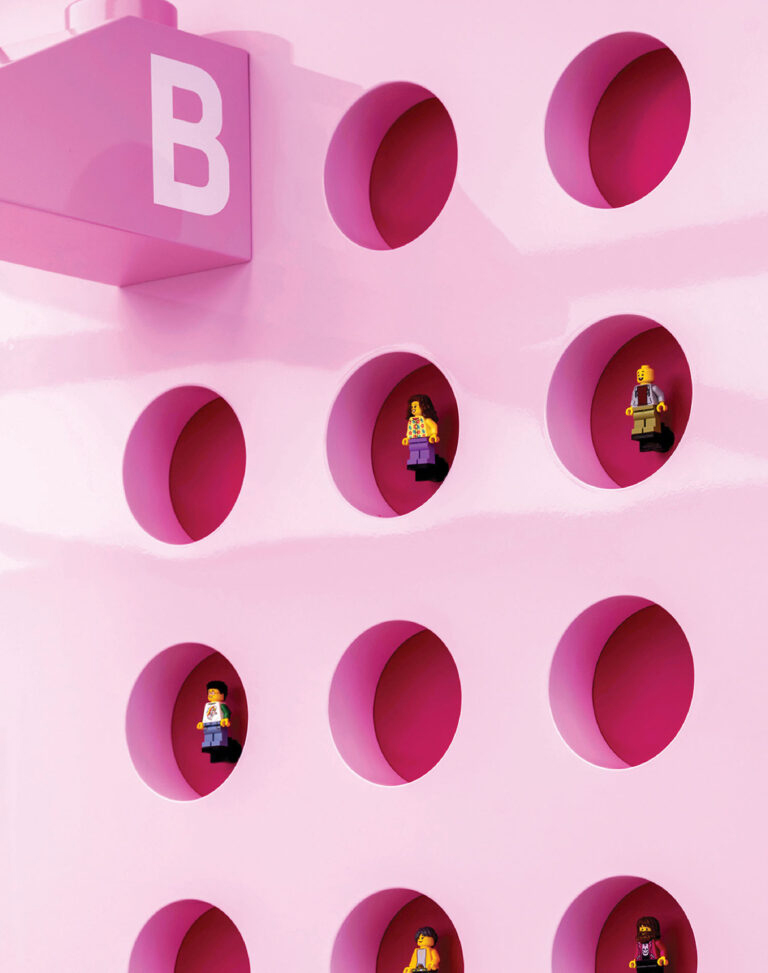
Another project where the robotic spray finisher was used was The LEGO Group’s new U.S. headquarters. Among many other surfaces, the elevator lobby panels were a particular challenge. Dozens of circular cut-outs give homes for employees to place a LEGO Minifigure of their own likeness. Making the guns spray inside the four-inch holes was a challenge.

About Us
Combining artistry with technology to produce superior woodwork.

Recognition
At Mark Richey Woodworking, we are honored to have been recognized for producing superior work on diverse projects.

Our Impact
We give our time and resources to protect the environment, and to support projects that we believe in.