Answering the industry’s call for sculptural wood
Mark Richey Woodworking pulls back the curtain on how it created some of the most impressive solid wood interiors of this decade.
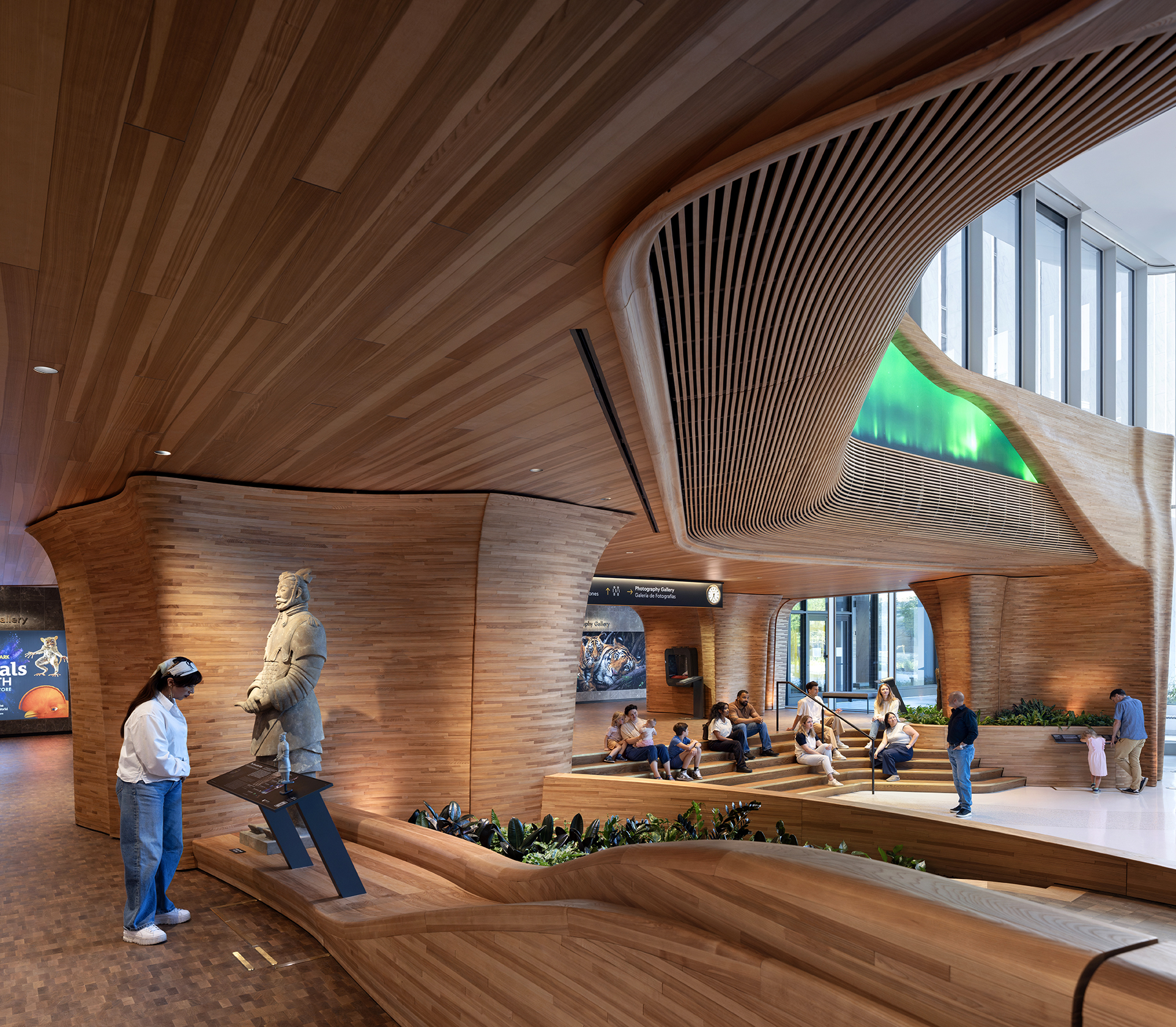

The Mark Richey Woodworking team over the last four years has been providing a unique solution to a growing trend in architecture. That trend is to create large scale sculptural interiors out of wood.
Creating large, organic shapes out of wood is a significant challenge.
Veneer – very thinly sliced leaves of wood commonly used on flat panels in furniture and millwork for its consistent appearance – doesn’t lay smooth over complex curves.
Solid wood moves a lot – sometimes by inches – with fluctuations in environmental conditions, meaning something glued up in any sort of scale could move out of alignment, crack, check, and split.
“These are the problems that dry stack solve,” shared Mark Richey Woodworking Chief Operating Officer Greg Porfido.
Dry stacked laminated solid wood
First developed by Mark Richey Woodworking in 2022 to answer the call from designer Hickok Cole and builder HITT Contracting to make the National Geographic Museum of Exploration in Washington, D.C., a visual feast of flowing wood walls, columns, and ceilings, dry stacking solid wood involves a labor-intensive process of attaching thousands of CNC routed solid wood shapes to a hidden rib system.
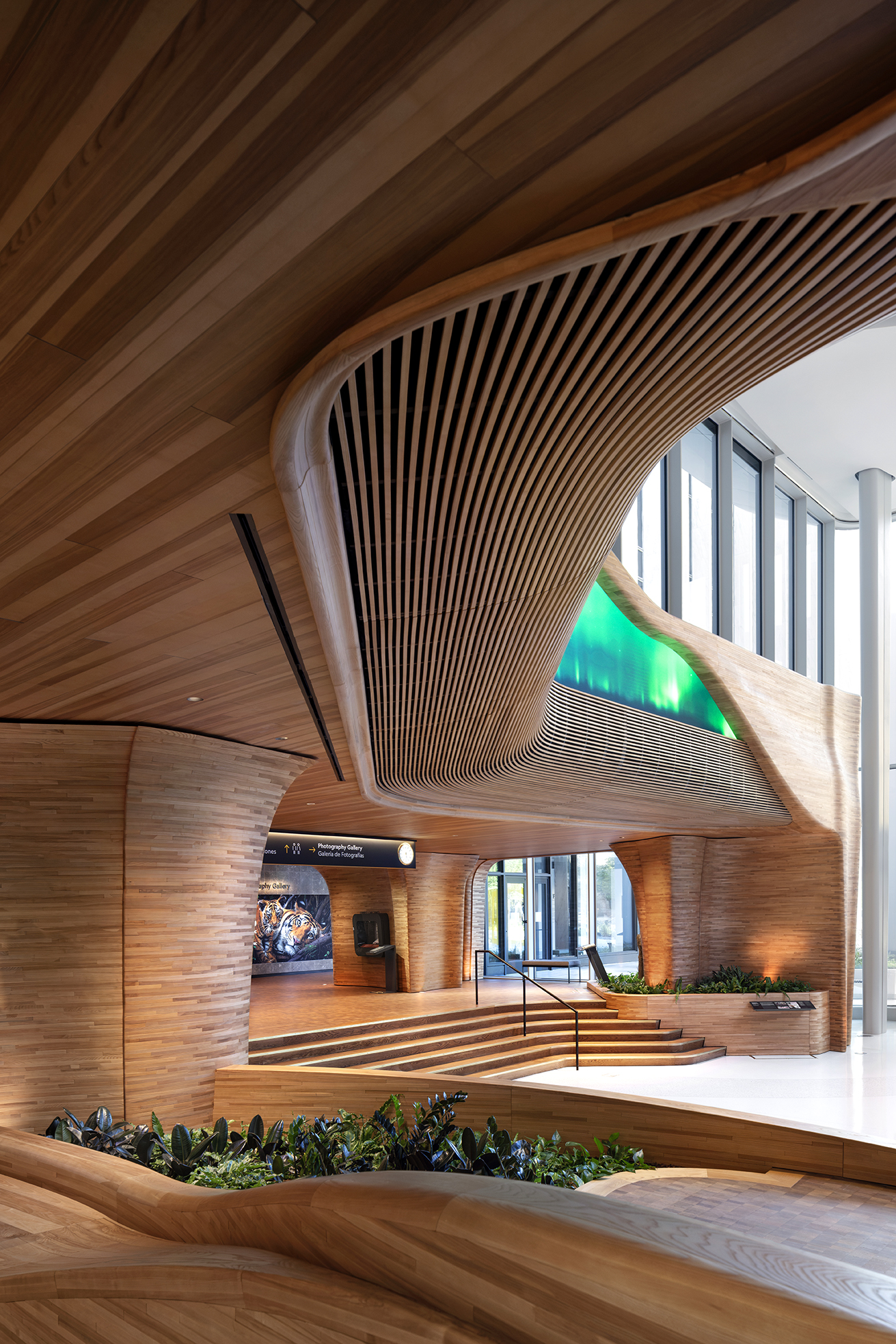
A Massachusetts-based company, Mark Richey Woodworking drew its inspiration for the concept from the Arthur Fiedler Memorial sculpture on the Charles River Esplanade in Boston. That sculpture features stacked stone.
Applying that technique to smooth and flowing wood – and an architect’s plans for capturing shapes within a building’s interior – is no small feat.
How did they do that?
Here’s how the Mark Richey Woodworking team accomplished the task.
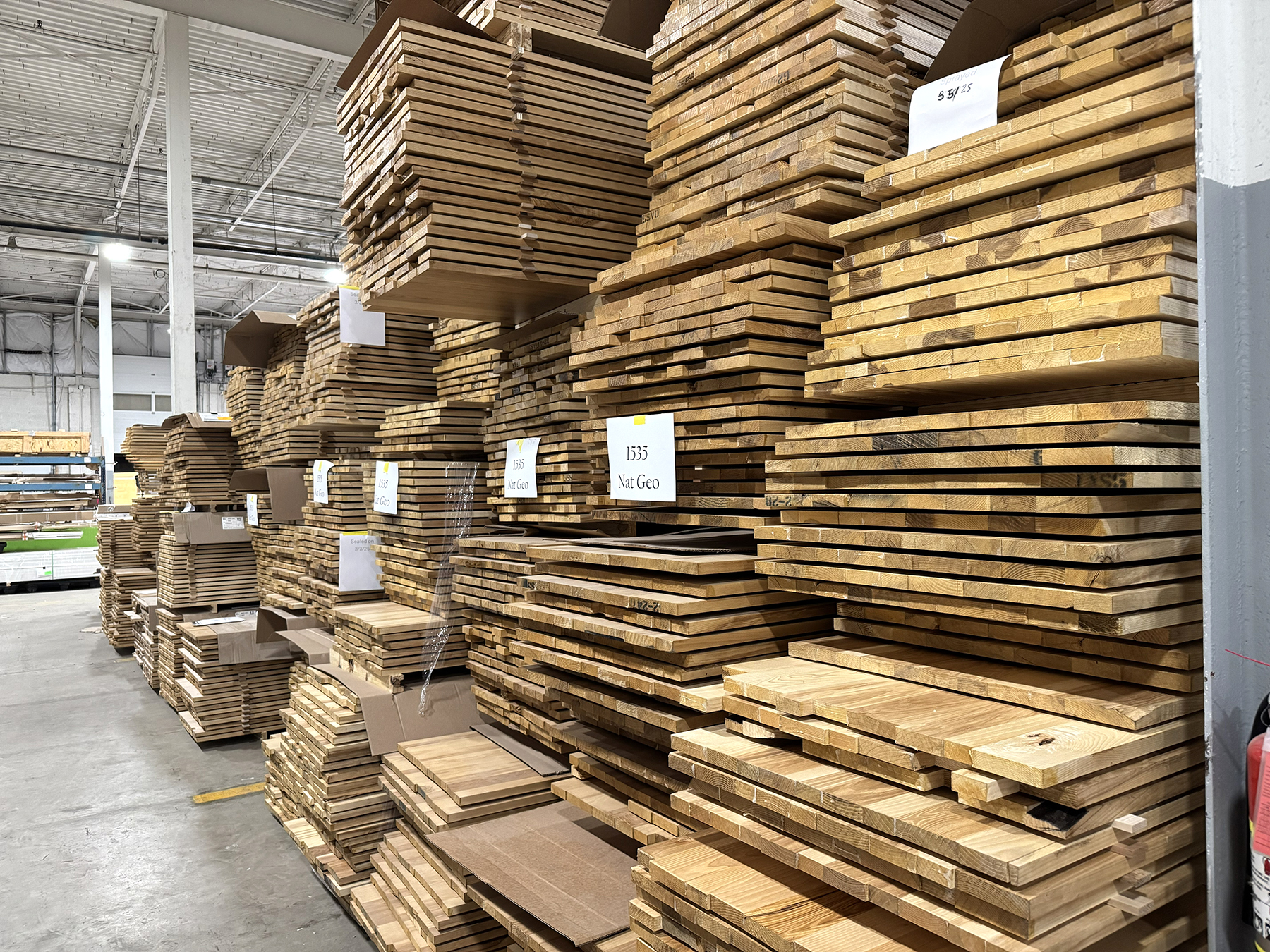
After carefully drawing, modeling, and labeling each part in computer assisted design (CAD) programs, solid wood “blanks” were created by gluing up solid wood planks – not unlike how a solid wood tabletop would be created.
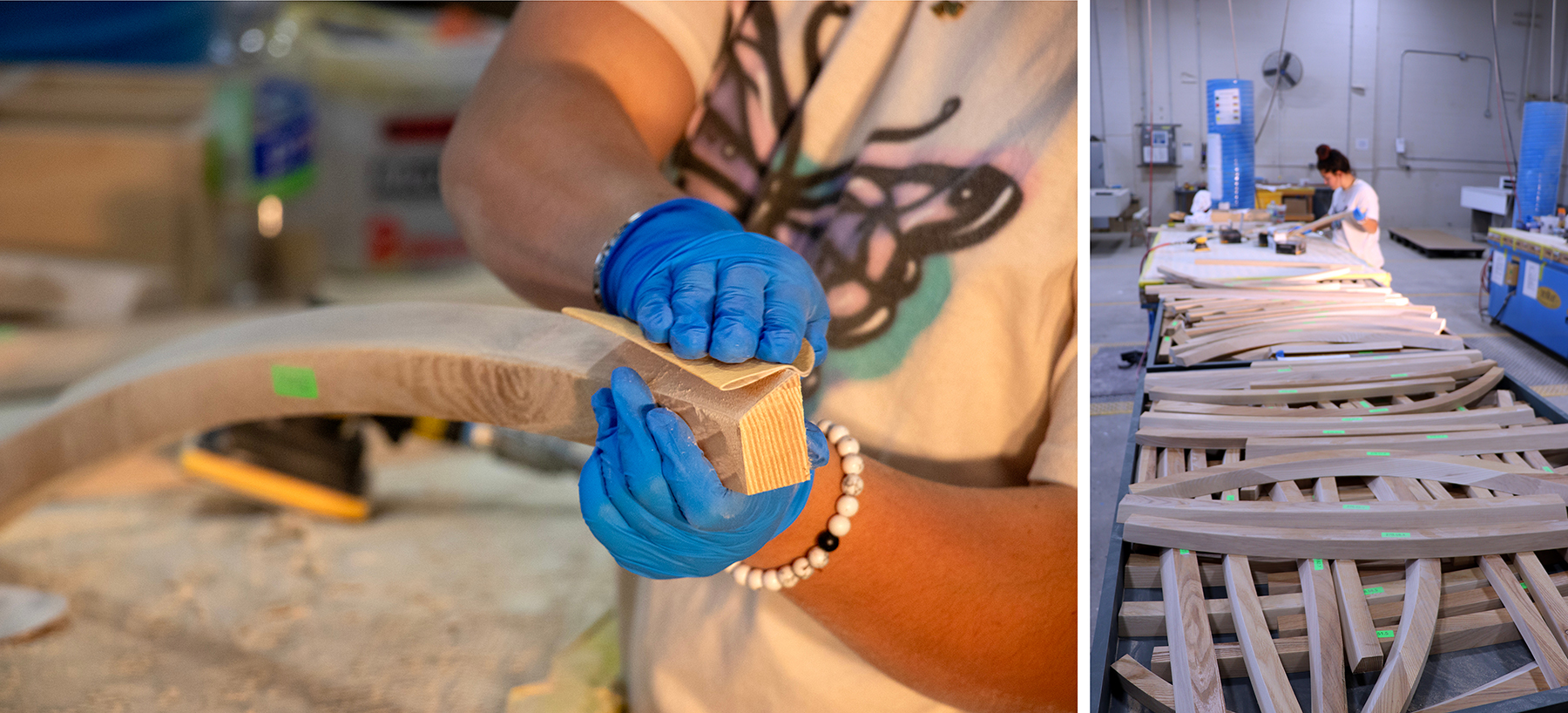
Those blanks went onto the CNC machine where each piece had to be programmed, routed, and labeled.
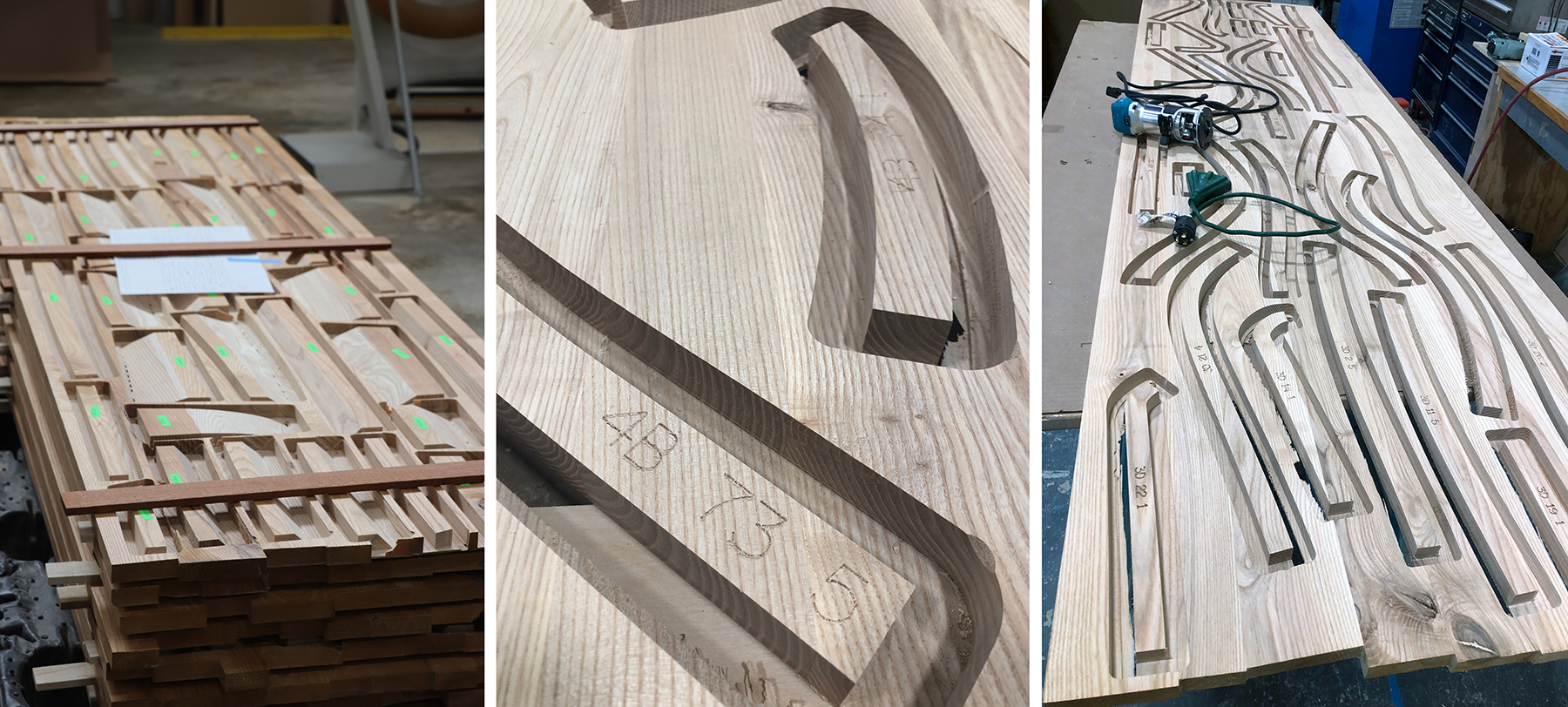
Those pieces then moved to the sanding department where each piece was hand sanded.
Pieces next moved to woodworking, where they were nailed from the top down onto plywood rib structures and sometimes screwed from behind. Woodworkers had to follow labeling and reference drawings to carefully align the approximately 1-inch by 1-inch pieces of varying lengths and shapes into the right places.
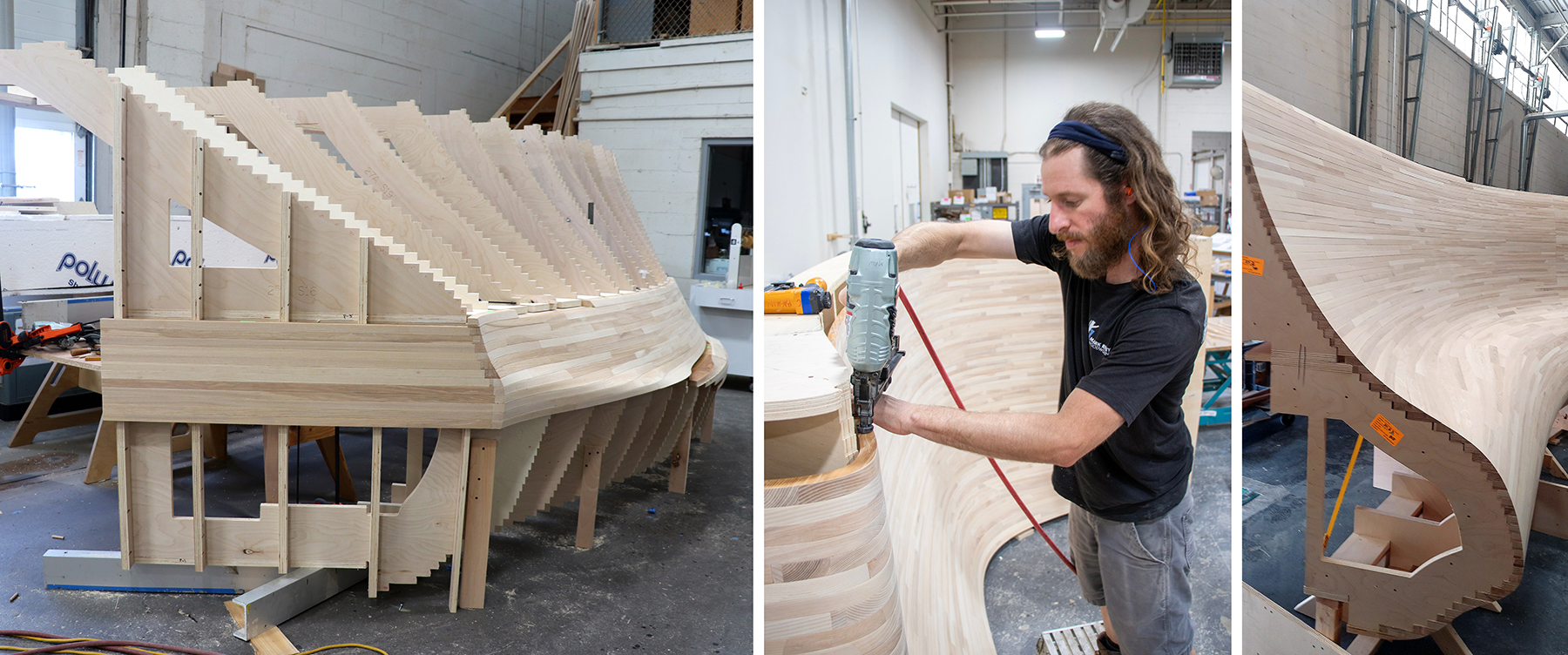
Assembled sections were then finished by hand.

Sections were carefully packed and shipped to site for installation to become cohesive, flowing forms.
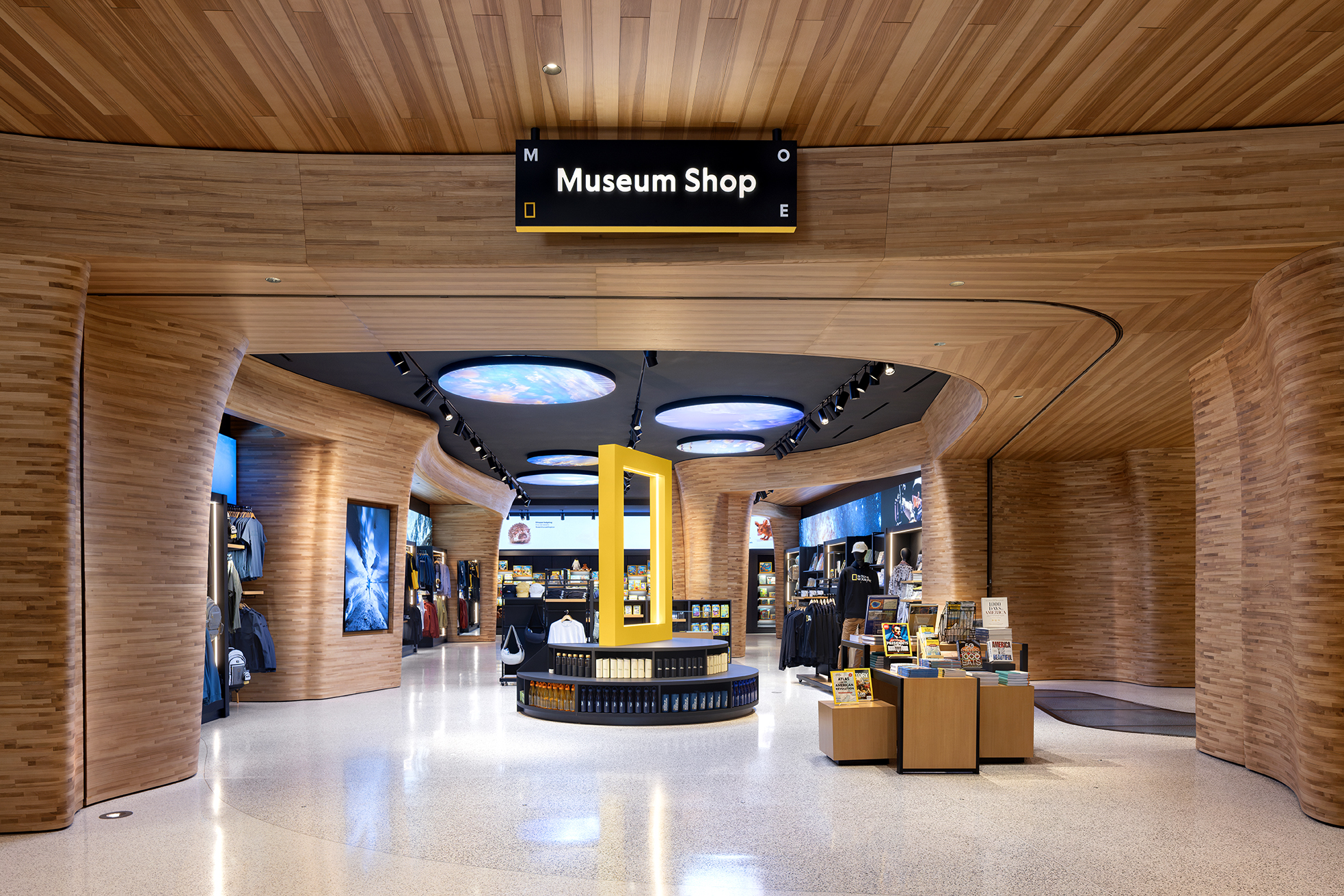
For National Geographic, nearly 70,000 solid wood parts were created, filling 100,000 square feet of space upon installation. After periods of estimating, design development, and about a year of engineering, the Mark Richey fabrication team actively worked building and finishing the dry stacked laminated sections for more than two years.
See more results

About Us
Combining artistry with technology to produce superior woodwork.

Recognition
At Mark Richey Woodworking, we are honored to have been recognized for producing superior work on diverse projects.

Our Impact
We give our time and resources to protect the environment, and to support projects that we believe in.