A true live edge table
WallGoldfinger Furniture shares the process of making a large slab table for a New York high rise.
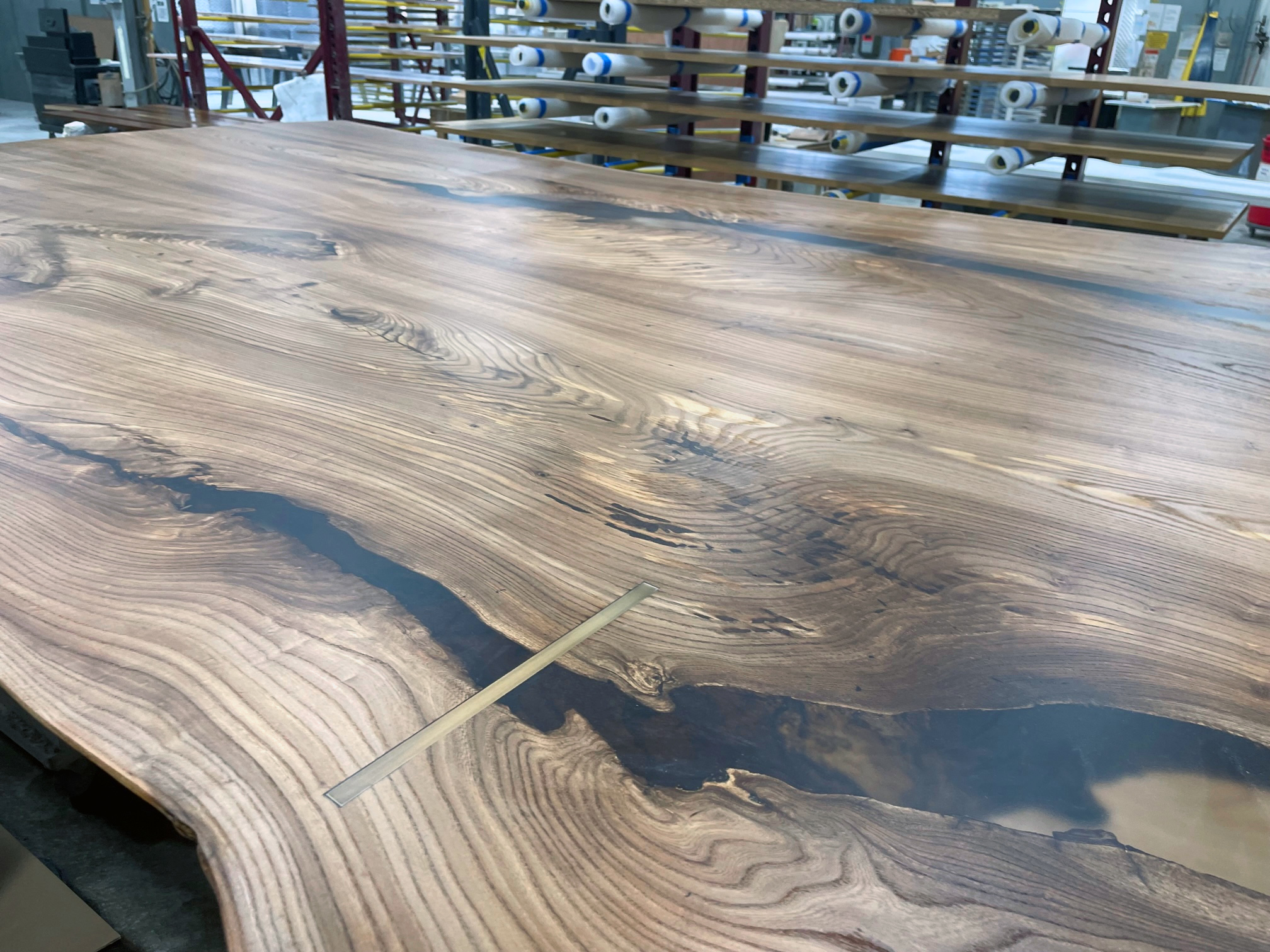
Live edge tables aren’t everyday projects for WallGoldfinger.
Most clients want tables fabricated from veneer, stone, glass, and metal in the corporate setting. However, as woodworkers, the WallGoldfinger team always likes a challenge involving wood. When a designer called looking for a large live edge table in a prominent downtown New York high rise, the team got to work making the vision a reality.
The table was specified as 6 feet wide and 18 feet long. Going into the 53rd floor of a skyscraper, the WallGoldfinger team knew that a single piece that size would not fit into the elevator, even if such a slab could be found.
After measuring the elevator, loading dock, and hallways on the floor, it was calculated that two pieces 6-foot by 9-foot could get onto the floor. Finding slabs that big was not going to be possible, however, so two pieces would be fabricated from four slabs.
After photo-sampling several species of wood with the client, red elm was chosen as the material and WallGoldfinger found slabs in the size and thickness needed across the country on the West Coast. The slab vendor sent photos.
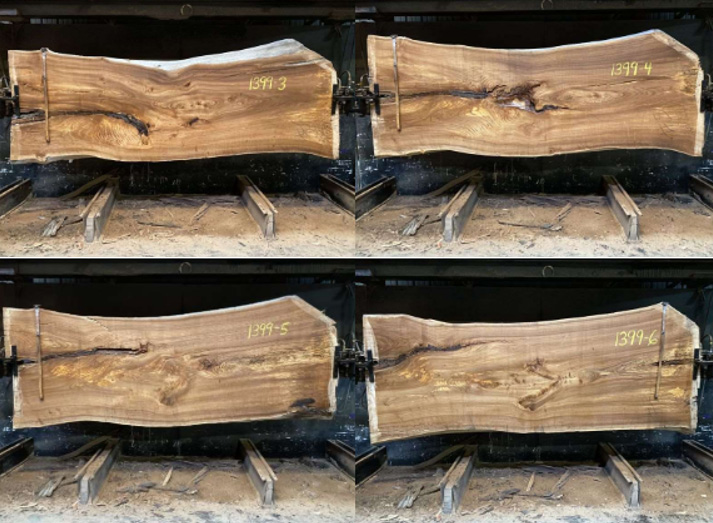
These are large slabs, about 40 inches wide by 10 feet long. You can see their width by the 3-foot ruler hanging from them. They are also sequential, which can be seen by the numbers, which means they can be book-and-butt-matched. Using simple photo editing, WallGoldfinger flipped and reversed some images, then cropped them and put them together.

Next WallGoldfinger’s rendering artist produced illustrations for the designer and client.
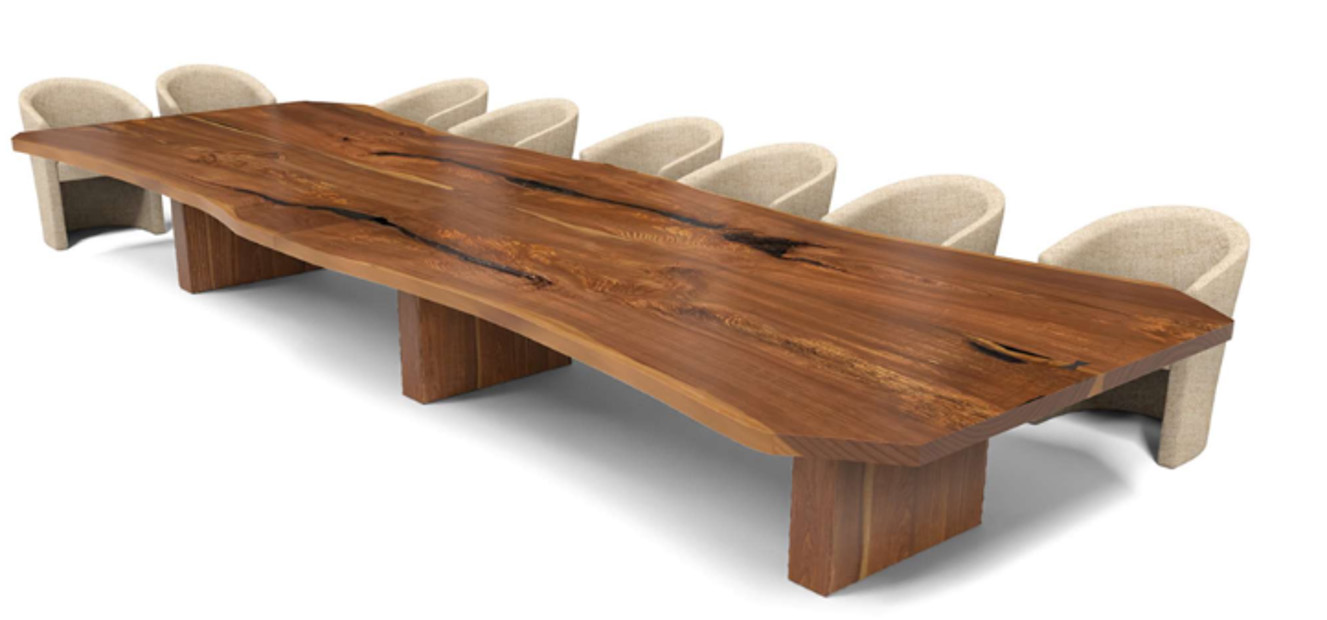
The client approved the look and the WallGoldfinger fabrication team got to work. Beginning at about 2 ½ inches thick and already kiln dried, WallGoldfinger put them on the CNC table to grind both faces, evening them off and getting them flat and level. Then, working around the imperfections in the wood, the team identified the lines to cut to create two tabletop halves, which could be joined in the field during installation.
Some of the loose “bark rivers” were ground out and filled, using a clear acrylic over similar wood applied to the underside. Some open splits were secured with bronze “slab stitches” to the designer’s preference. The edges were cleaned up but otherwise left alone in their rustic nature. The table’s bases are veneer.
The end product came very close to those initial renderings, but without the angled corners. The slabs were large enough to keep the tree’s natural exterior shape and four large slabs became one very large slab table.
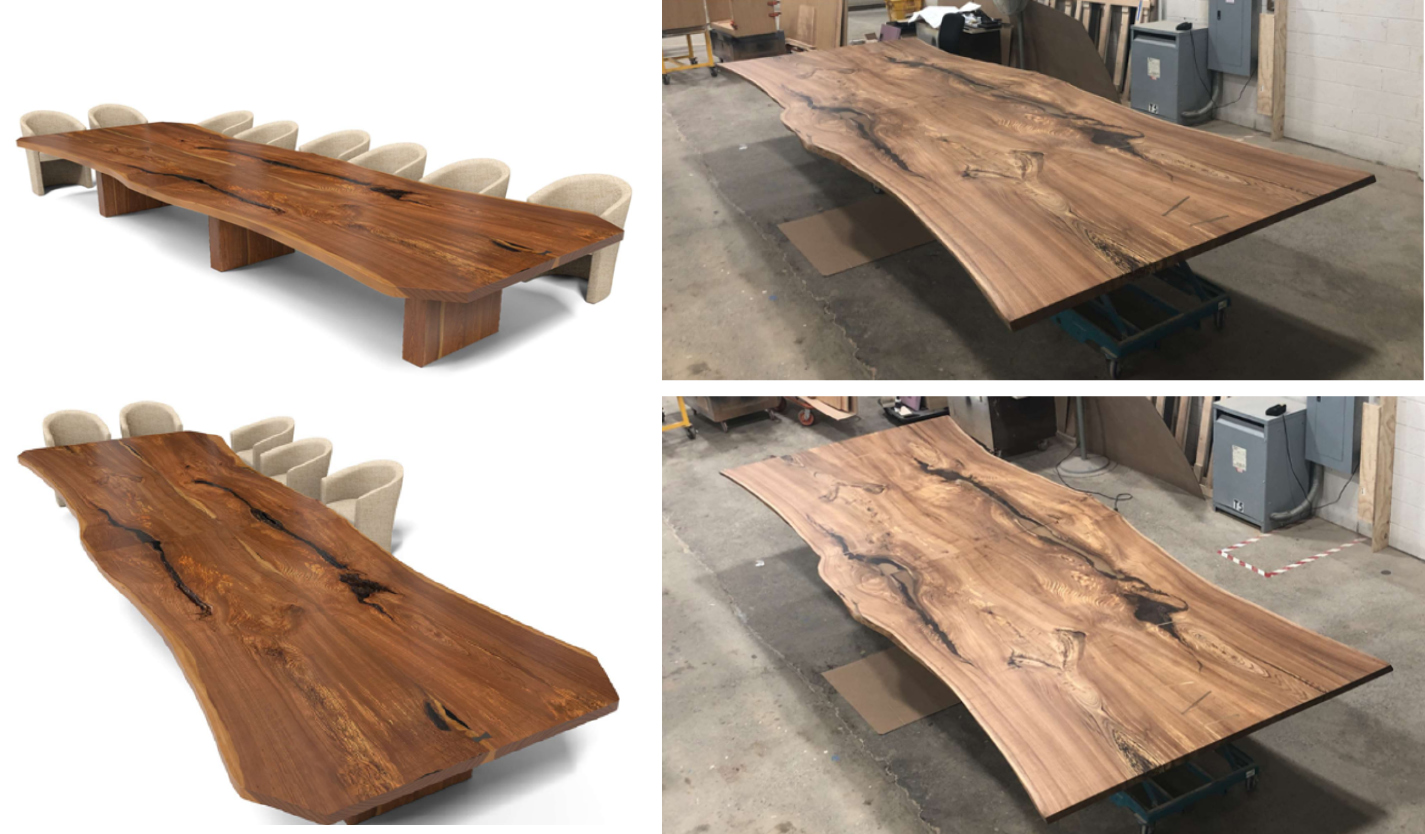

The designer and client were very happy with the finished product.
See more WallGoldfinger custom furniture and product lines: https://www.markrichey.com/wallgoldfinger-furniture

About Us
Combining artistry with technology to produce superior woodwork.

Recognition
At Mark Richey Woodworking, we are honored to have been recognized for producing superior work on diverse projects.

Our Impact
We give our time and resources to protect the environment, and to support projects that we believe in.