Mark Richey projects earn Green Building Showcase awards
Mark Richey Woodworking earned recognition on Nov. 4 at the Green Building Showcase for the National Geographic Museum of Exploration project in Washington, D.C. Also recognized was the David Rubenstein Treehouse at Harvard University, which hosted the event by Built Environment Plus. Read all about these projects.
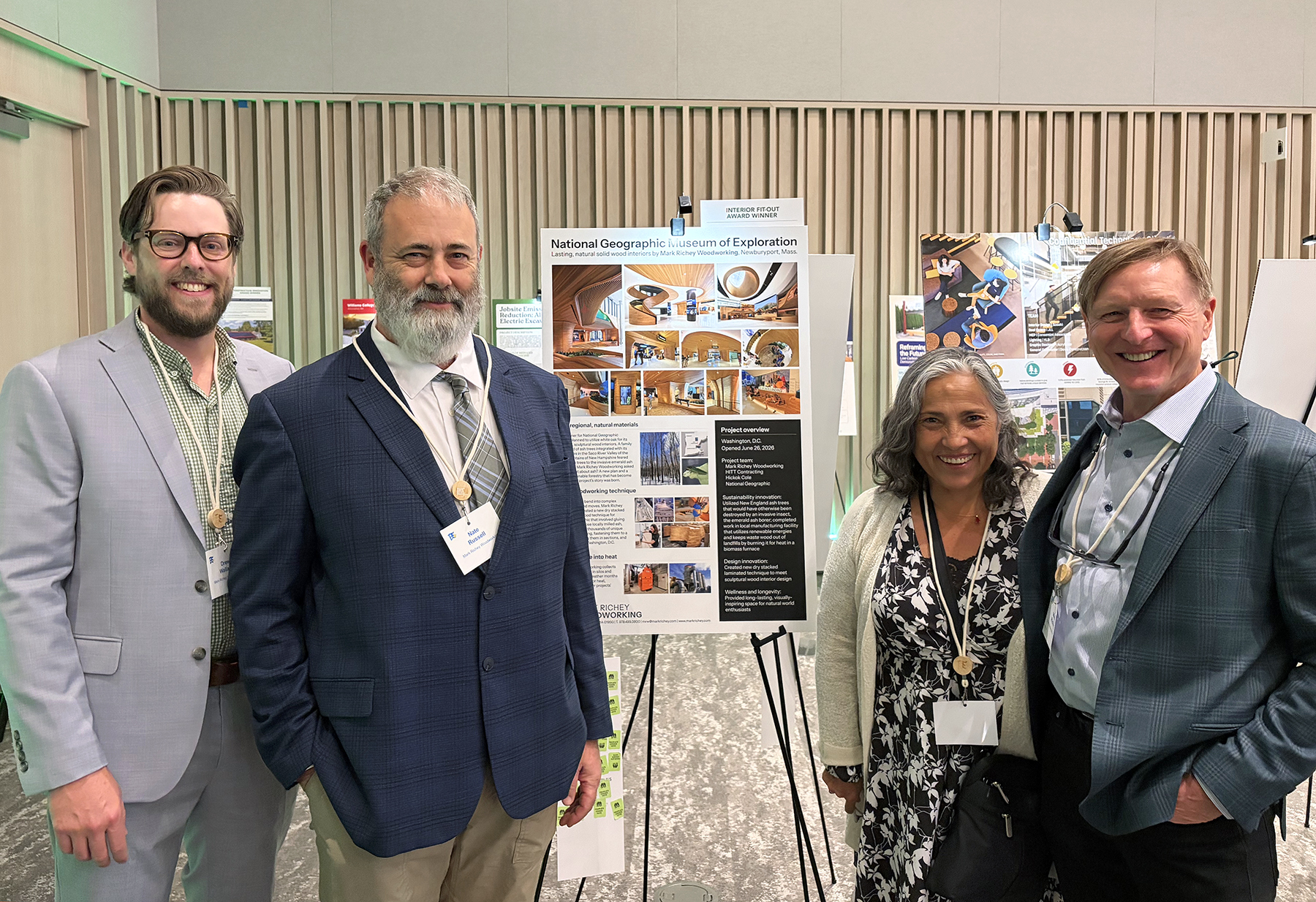
Green manufacturer Mark Richey Woodworking of Newburyport, Mass., spent years working on the National Geographic Museum of Exploration in Washington, D.C. On Nov. 4, the project that utilizes ash trees already planned for cutting was honored at the Green Building Showcase 2026 as the winner in the Sustainable Interior Fit-out category by Built Environment Plus (BE+).
The recognition took place at the David Rubenstein Treehouse at Harvard University in Allston, Mass. Mark Richey Woodworking additionally had the privilege of working on the Harvard Treehouse project, which was also recognized with an award. It won in the Health and Wellness category.
Mark Richey Woodworking owners Teresa and Mark Richey, National Geographic Project Manager Nate, Harvard Treehouse Project Manager Drew, and Business Development Manager Pam attended the event to accept the award for the National Geographic project.
“It was exciting to be there as an award entrant for the first time and to be in a space that we helped build,” noted Pam, who attends the event each year. “Built Environment Plus did a fantastic job putting together a beautiful event, and we were honored to receive the Interior Fit-out award for the incredible National Geographic project.”
The jury reviewing entries called out the project’s innovative use of materials and its potential to set the course for a new way to look at sustainable design.
“What set this project apart was its truly unique approach to the circular economy. It moves beyond conventional ideas of sustainability and demonstrates how thoughtful design, material innovation, and craftsmanship can work together to rethink the lifecycle of an interior,” they wrote. “The jury was inspired by its potential to push our industry to think differently about how we design, source, fabricate, and ultimately reuse materials.”
About National Geographic
Mark Richey Woodworking collaborated with HITT Contracting, architect Hickok Cole, and client National Geographic, all of Washington, D.C., to create sculptural solid wood interiors for National Geographic’s reimagined Museum of Exploration.
The project included 100,000 square feet of stunning curvilinear columns, walls, ceilings, benches, and more fabricated from wood that brings the natural world into a space dedicated to global exploration, science, and storytelling.
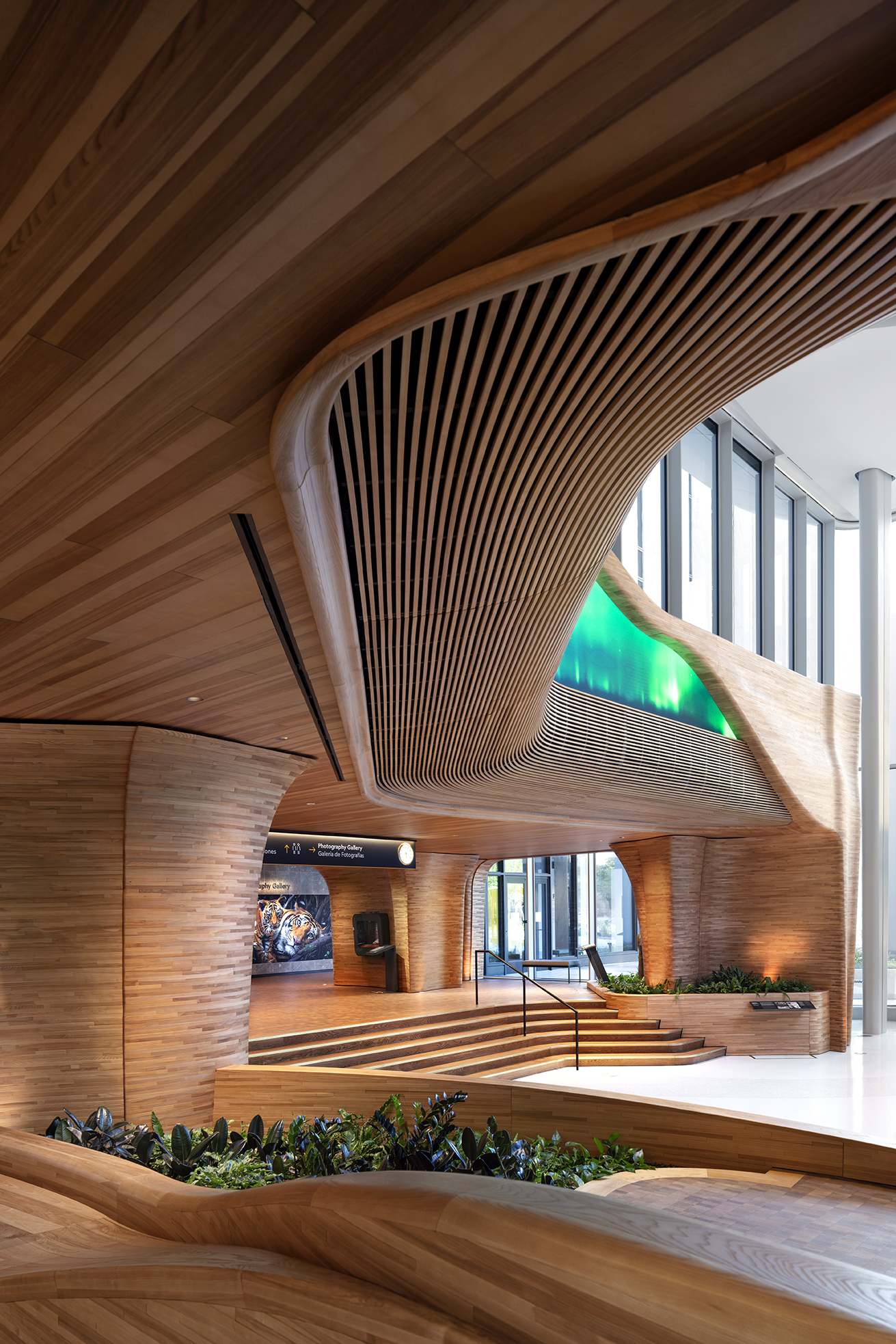
One story the space shares – in stunning video and interviews by National Geographic done at Mark Richey Woodworking and a rural property in New Hampshire – is that of the millwork itself.
The project had sought to use white oak to create its interiors. A family with a stand of ash trees integrated with its sugar maples in the Saco River Valley of the White Mountains feared losing its ash trees to the invasive emerald ash borer beetle. The family planned to cut the ash to save their maples from eventual damage when the ash fell. But who could use them?
Mark Richey heard of the family’s desire to cut their ash and asked its client: what about ash? A new plan and story of small scale, local, sustainable forestry was born.
It took the Mark Richey Woodworking team about four years of detailed drawing and painstaking hand and machine work to turn those ash trees – and others from Vermont – into the long-lasting, quality interiors that today are appreciated by the nature-minded public visiting the new National Geographic Museum of Exploration.
Read about the unique dry stacked laminated building technique that allowed for these sculptural interiors: https://www.markrichey.com/news/sculptural-wood-technique
In addition to the dry stacked laminated technique, some ash boards were steam bent.
In the ceiling of the National Geographic Museum of Exploration is a feature called the oculus. It includes 730 pieces of solid ash steam bent to create a stunning curved shape. In between the solid ash slats is speaker fabric designed to absorb sound to make the public space quieter.
The technique was also utilized in the project’s mezzanine and reception desk.

More about the ash borer
When Mark Richey Woodworking, HITT Contracting, and National Geographic first started researching the emerald ash borer several years ago at the project start, 36 states were impacted by the insect. Today, 37 states have had ash tree populations wiped out by infestations, costing billions of dollars for tree removal, treatment, and replacement. Washington became the 38thstate impacted in September of this year with the discovery of its first emerald ash borer.
For the New Hampshire family in the flood plains of the Saco River, the collaboration with Mark Richey Woodworking and National Geographic meant a transition away from impending loss.
The story gained national attention as the museum prepared to open to the public: https://www.youtube.com/watch?v=xRhKWat4EaI. HITT Contracting expertly describes the project millwork and its selectively harvested wood: https://www.youtube.com/watch?v=-PS8vFbWoJ8. Read what National Geographic has to say: https://moe.nationalgeographic.org/en/whats-on/pavilion.
Reducing waste
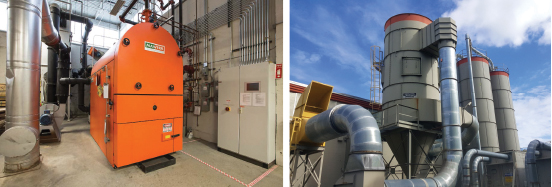
Utilizing solid wood and gluing up planks to create a surface from which to cut complex shapes, as was done with the dry stacked laminated technique, has the potential to create waste. Mark Richey Woodworking, however, is a green manufacturer and utilizes a biomass furnace and dust collection system to extract energy from its stored wood waste.
Now, and for the prior several heating seasons, those ash trees that benefited the New Hampshire family and National Geographic also benefit Mark Richey Woodworking’s expansive production facility in the form of environmentally friendly heat. Besides providing heat and reducing reliance on fossil fuels, that biomass heating system diverts manufacturing waste from landfills.
About Harvard Treehouse
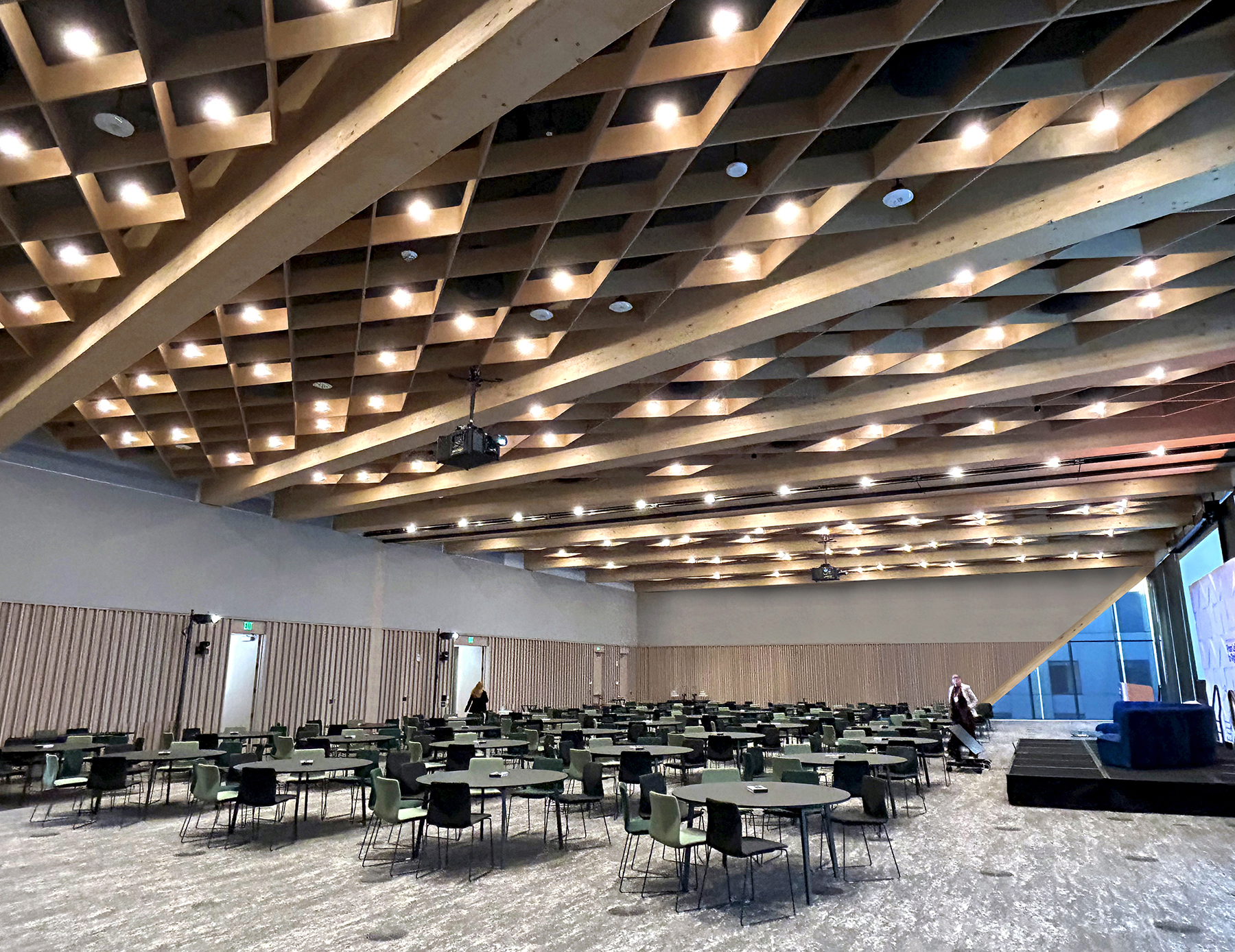
Like National Geographic, the David Rubenstein Treehouse at Harvard University in Massachusetts utilizes green materials to create an interior of exposed wood.
A mass timber structure designed by Studio Gang and built by Consigli and Smoot Construction Company of Washington, D.C., it features a conference center and social hub.

Mark Richey Woodworking used various Forest Stewardship Council® (FSC®)-certified woods to help Harvard meet the world’s most ambitious green building standard, the Living Building Challenge.
Exterior planking is Alaskan yellow cedar. Interior handrails are solid white oak. A reception desk is veneer and solid surfacing. An impressive, suspended ceiling in the third floor Canopy Hall main events space where the Nov. 4 Green Building Showcase took place is a poplar core plywood with exposed edges and three-dimensional wall paneling is solid white oak and veneer.
According to Built Environment Plus' award announcement, it was materials like ground glass pozzolan in structural concrete, making it the first building in Massachusetts to use this recycled material as a cement replacement in structural applications, along with systems like an all-electric kitchen and advanced ventilation for indoor air quality that impressed in the Health and Wellness category.

See more
Take a closer look at incredible images of these projects:
https://www.markrichey.com/architectural-woodwork/work/national-geographic-museum-of-exploration
Learn more about the Green Building Showcase and BE+
Built Environment Plus has posted a digital image gallery of the Nov. 4 Green Building Showcase event. See that, including all entries and winners, here: https://miro.com/app/board/uXjVEW0oNxU=/?share_link_id=958309385582
Read what BE+ had to say about the National Geographic and Harvard Treehouse projects and all winning entries: https://burltenvironmentplus.org/gbs26-winners/
BE+ strives to drive sustainable and regenerative design, construction, and operation of the built environment. It recognizes successes in the local green building community at its Green Building Showcase Awards Program and Celebration held each fall in the Boston area.
Pictured at the top of the page are, from left, Mark Richey Woodworking project managers Drew and Nate and company owners Teresa and Mark Richey at the Nov. 4 Green Building Showcase.

About Us
Combining artistry with technology to produce superior woodwork.

Recognition
At Mark Richey Woodworking, we are honored to have been recognized for producing superior work on diverse projects.

Our Impact
We give our time and resources to protect the environment, and to support projects that we believe in.